


How to choose your MTB cassette?

Commonly referred to as "sprockets", the MTB cassette is essentially the gearbox of your bike. It is important to choose this component carefully so that it is not only compatible with the rest of your MTB drivetrain but also so that you have gear ratios that suit you. Here is everything you need to know on the subject.
Standards
- Number of speeds: 9, 10, 11 or 12
- Freehub body type: SHIMANO, SRAM XD or SHIMANO Microspline
- Sprocket ranges
Types of MTB cassettes
To begin with, it is useful to clearly distinguish between the cassette-type assembly a and the freewheel type b.

When the sprockets are independent of the freehub system (known as the freehub body), the full set of sprockets is called a "cassette" — this is the current standard.
When the freehub system is integrated into the sprockets, the assembly is called a "freewheel" — this is a rather older standard.
All drivetrain components are designed to work with a specific speed standard, so you cannot pair a 9-speed cassette with a 10-speed drivetrain, for example. Today, most MTBs run 10-speed, 11-speed or 12-speed, but 9-speed is still easy to find, and 8-speed is occasionally available. In DH, 7-speed cassettes adapted to the specific demands of the discipline can be found.
The freehub body is the part that acts as the support for the cassette. There are 3 standards:
- SRAM XD (11 or 12 speeds).
- Shimano (8/9/10 or 11 speeds) / SRAM (9/10 speeds).
- Shimano Microspline (12 speeds).
The sprocket range of cassettes is always defined by its extremes. For example, if it states "11/36", the smallest sprocket will have 11 teeth and the largest will have 36. The more teeth a sprocket has, the less effort is required to turn the wheel, and vice versa.
Which MTB cassette should you choose?
Current manufacturing techniques make it possible to increase the number of speeds on the cassette and therefore reduce the number of front chainrings. Simpler to use, this also eliminates the duplicate gears found on more traditional drivetrains.
The choice of cassette will depend on the rest of your drivetrain — you will need to use the same speed standard as what you already have, respecting the capacity (Calculation determining the required derailleur capacity:
(maximum cassette sprocket – minimum cassette sprocket) + (maximum chainring – minimum chainring) = capacity. T = number of teeth.) of your derailleur. Among the available options, you can choose the tooth profile based on your level of MTB riding.
Découvrez tous nos conseils & Tutoriels
MTB - Cassettes
-
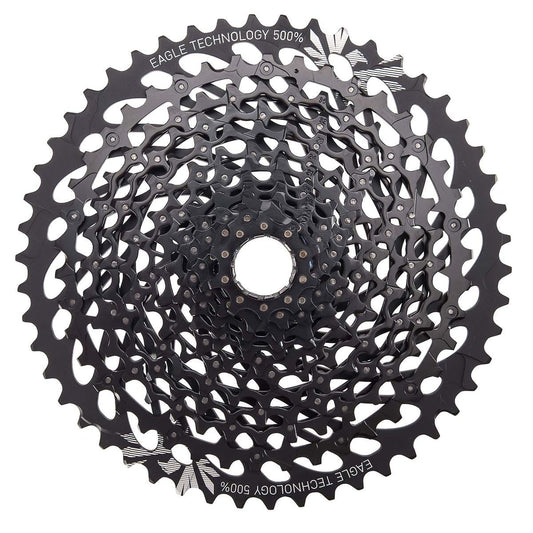
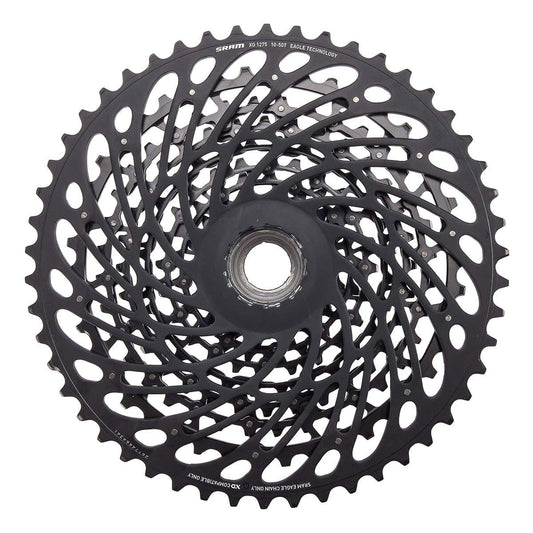
12-Speed Cassette SRAM GX EAGLE XG-1275
Regular price From 1,644.00 SEKRegular priceUnit price per -
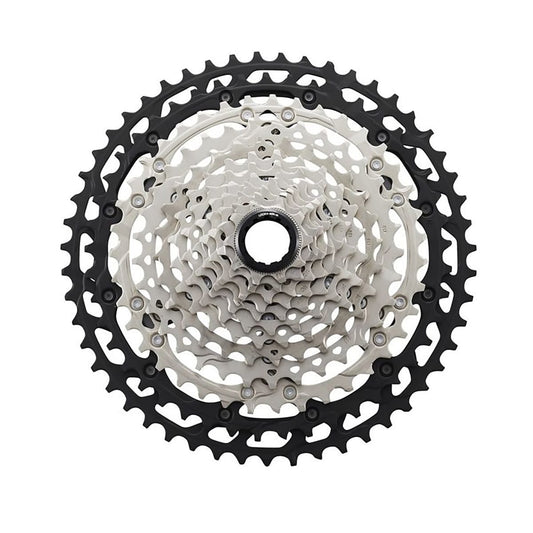
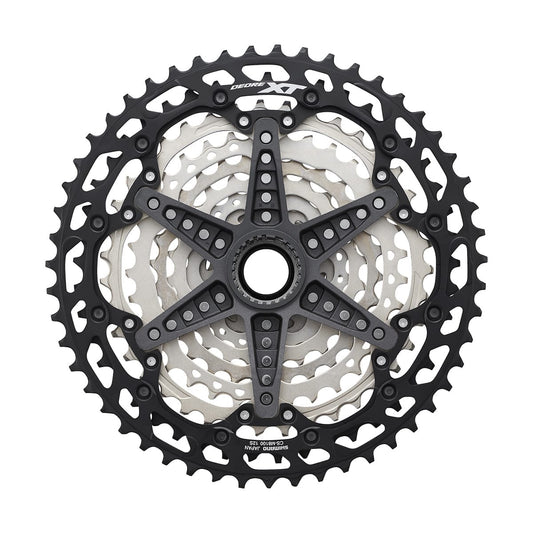
12-Speed Cassette SHIMANO DEORE XT CS-M8100
Regular price From 1,117.00 SEKRegular priceUnit price per -


11-Speed Cassette SHIMANO DEORE CS-M5100
Regular price 470.00 SEKRegular priceUnit price per -
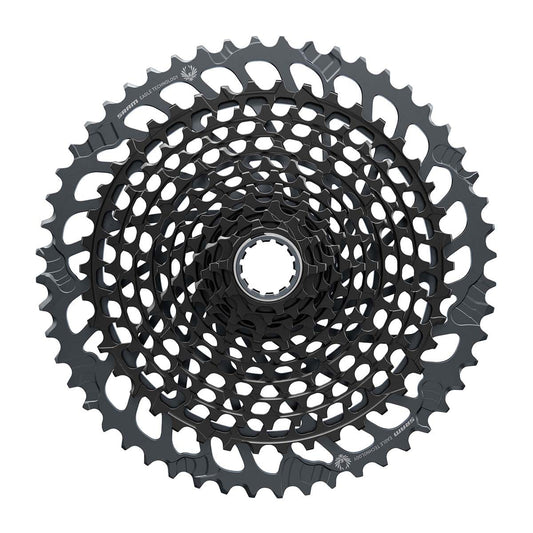
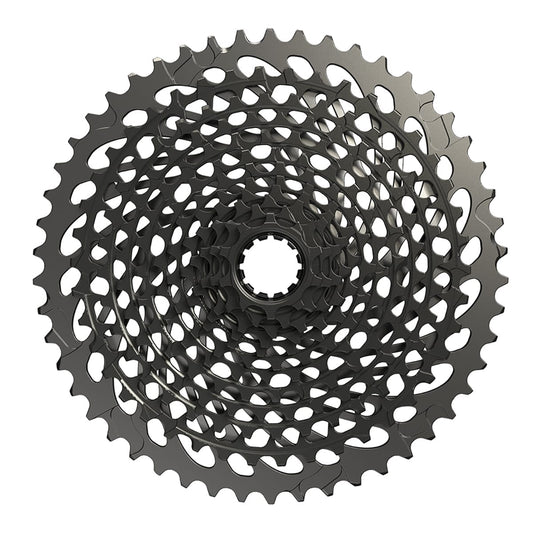
SRAM X01 EAGLE XG-1295 12-Speed Cassette
Regular price 3,524.00 SEKRegular priceUnit price per -
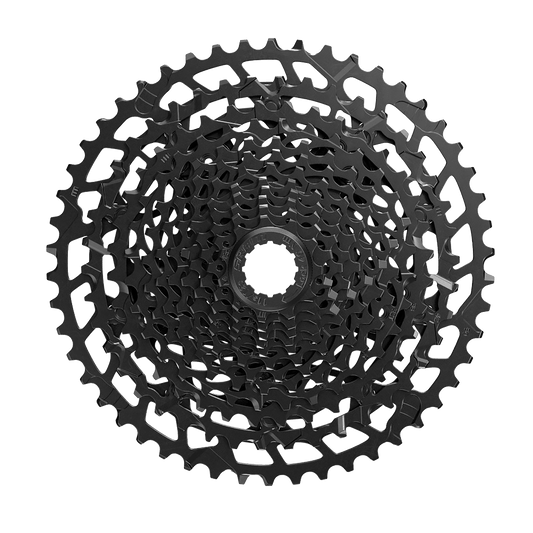
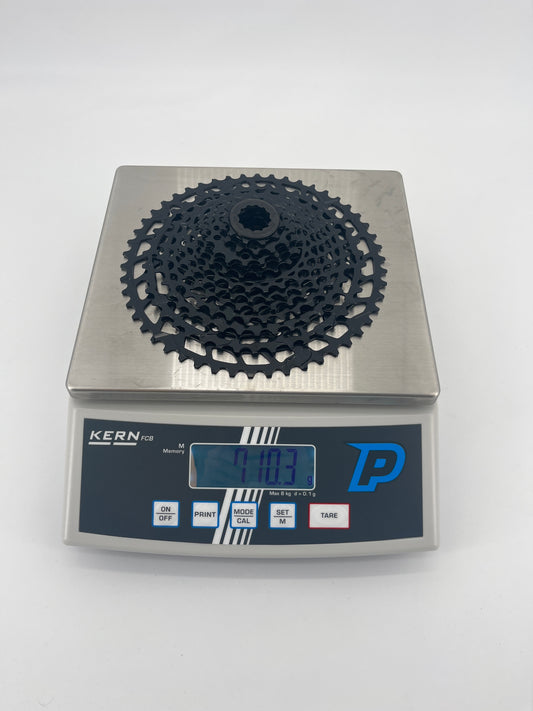
SRAM SX EAGLE PG-1210 11/50 12-Speed Cassette
Regular price 764.00 SEKRegular priceUnit price per -
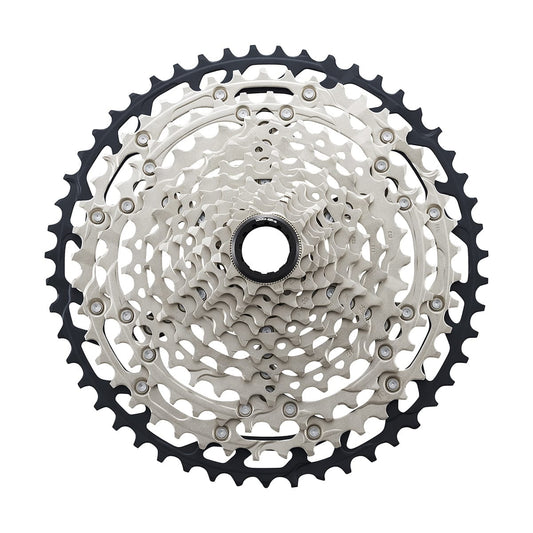
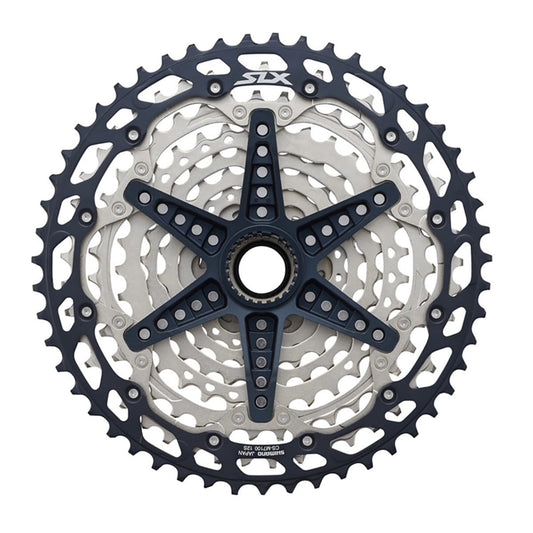
12-Speed Cassette SHIMANO SLX CS-M7100
Regular price From 823.00 SEKRegular priceUnit price per -
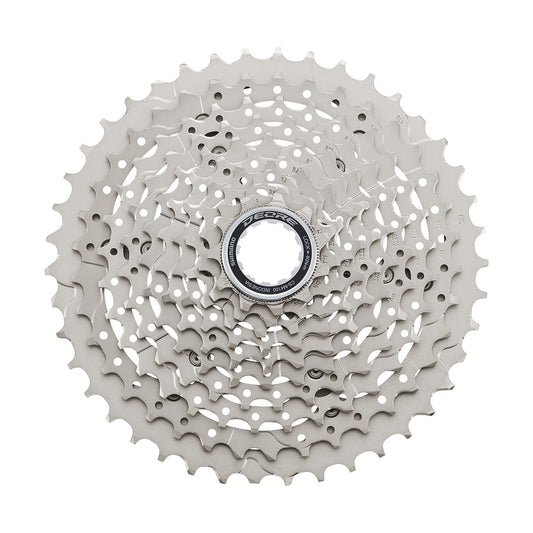
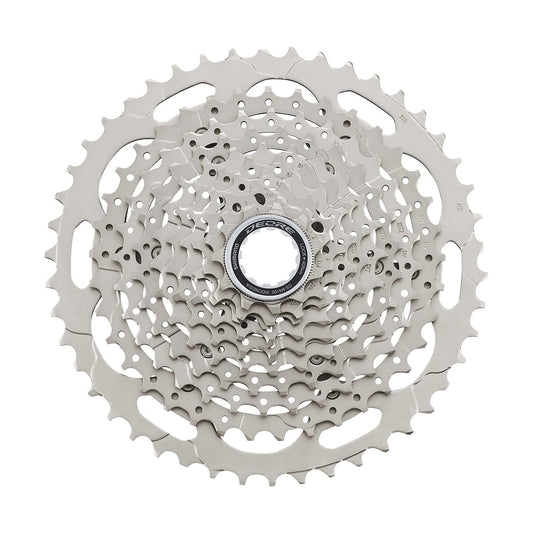
10-Speed Cassette SHIMANO DEORE CS-M4100
Regular price From 353.00 SEKRegular priceUnit price per -
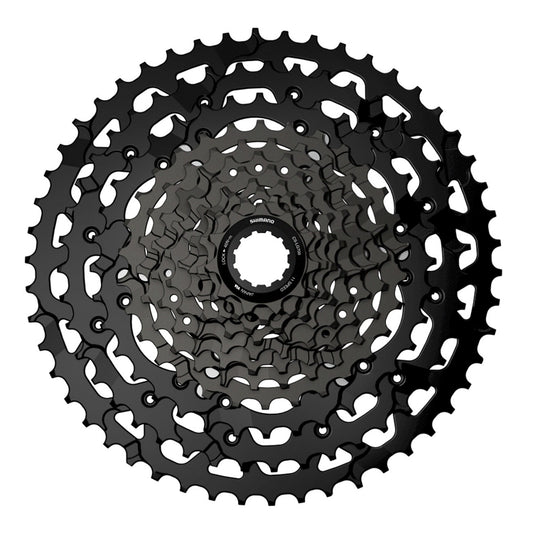
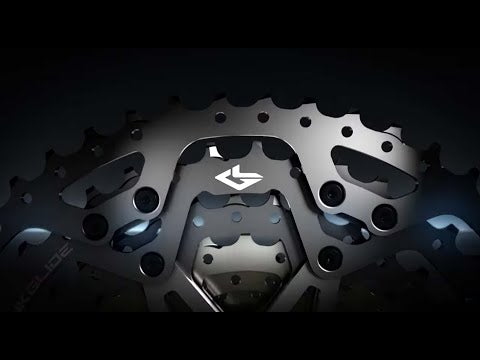
11-Speed Cassette SHIMANO CS-LG700 Linkglide
Regular price 705.00 SEKRegular priceUnit price per


