


Taking up an increasing share of the bike market, particularly in MTB, the electric bike has changed the way MTB is ridden. While prices are still well above those of a conventional (muscle-powered) MTB, the growing number of motor and battery manufacturers and the development of ever-wider ranges across virtually all bike brands are making this discipline more accessible than before. But what does an electric MTB really offer and how do you choose the model best suited to your needs?
WHAT AN ELECTRIC MOUNTAIN BIKE HAS TO OFFER...
Electric mountain bikes (e-MTBs) open up new possibilities for cyclists of all levels.
- For people wishing to (re)discover the pleasures of MTB: going electric is an excellent way to ease back into sport and stay in shape. At maximum assistance on a flat route, the effort is comparable to walking.
- For those riding MTB in trail/leisure mode: an e-MTB allows you to tackle routes you previously considered too long or too demanding, whether physically or technically, particularly in mountainous regions.
- For experienced riders: the benefits are genuinely real here too. Riding an e-MTB is an opportunity to approach your sport differently, focusing on riding technique without setting aside the physical dimension. You can move more quickly through rolling and/or less interesting sections so as to tackle the most technical parts in better shape.
EVERYTHING YOU NEED TO KNOW ABOUT ELECTRIC MOUNTAIN BIKES
E-bike or Speedbike
There are currently two types of electric mountain bike: e-MTBs and Speedbikes.
The e-MTB is the most widespread. It is a bike equipped with a motor with a maximum power of 250 watts providing assistance up to 25 km/h, which only operates when you are pedalling.
The Speedbike is less common. Providing assistance up to 45 km/h, its use is tightly regulated since under current legislation it must be registered and have a registration document as well as a number plate. It must also be insured, be ridden with a motorcycle helmet and gloves, and must not be used on cycle paths.
THE MOTOR
Regarding the motor unit, it can be positioned at the bottom bracket, in the front wheel or in the rear wheel.
Hub motors are virtually absent from the MTB sector because, in addition to reliability issues, they alter the weight distribution and overall balance of the bike, with the centre of gravity shifted forwards or backwards depending on the case, which can hinder handling.
The vast majority of e-MTBs are therefore equipped with a mid-drive motor, offering the best efficiency/reliability ratio, with optimal weight distribution, a low centre of gravity, and handling very close to that of a conventional MTB. Motor power is generally 250 Watts (the maximum permitted). The difference between motors will therefore mainly come down to torque, ranging from 40 to over 70 Nm for the most powerful models, the levels of assistance, and the linearity and progressiveness of the motor. In practice, the higher the torque, the more the motor will guarantee lively acceleration and sharp pick-up. Conversely, high linearity will provide consistent comfort at both low and high cadences.
Some models, notably that of the historic market leader Bosch, only accept a small sprocket, while others, such as the Yamaha, allow the fitting of a double chainring system for maximum versatility.
THE BATTERY
The battery, initially placed on the down tube, is now increasingly integrated directly into the frame, allowing new-generation e-MTBs to display a clean design very close to that of muscle-powered MTBs. Power, expressed in watt-hours, corresponds to the voltage (in volts) multiplied by the capacity (in ampere-hours), with higher power meaning greater range. In MTB, batteries generally range between 250 and 600 Wh.
The motor/battery combination obviously adds weight to the bike, generally between 5 and 8 kg: most electric MTBs therefore weigh between 20 and 25 kg, hence the importance of choosing the right battery capacity to avoid running out of power and facing a difficult return journey.
THE ON-BOARD COMPUTER
In order to monitor all the parameters of your drivetrain, electric MTBs come with an on-board computer that is more or less comprehensive depending on the intended use. From the simplest and most compact unit displaying the essentials (speed, distance covered, selected assistance level, battery level) to the most advanced integrating GPS, Bluetooth connectivity and even a USB port, you will definitely find the model that suits you, knowing that it is possible to replace the original computer with a higher-spec model.
WHICH E-MTB FOR MY RIDING STYLE?
Hardtail or full-suspension, 27.5 or 29-inch wheels — all the configurations possible on a conventional MTB are found on electric models. The only difference concerns the frame material, as aluminium frames are essentially the norm — except at the very high end — for obvious reasons of robustness and ease of battery integration.
As with a muscle-powered MTB, your choice should be guided by geometry and equipment to best match your riding style and expectations, while also taking into account motor torque and battery capacity. Beyond that, it all comes down to personal taste and, above all, budget, with the average price still well above 2,000 euros.
Trail riding
For leisure use, you will most often opt for a hardtail to avoid adding extra weight to the bike. However, you may choose a full-suspension for greater comfort. At this level of the range, you will most often find a motor with a torque of 40 to 50 Nm and an external battery of 400 Watts to offer a competitive price-to-performance ratio, a fork with 100 to 130 mm of travel to increase versatility, and 27.5" or 29" wheels, even though 27.5+ is a particularly relevant hybrid format for electric bikes as it provides more comfort, stability, traction and versatility.
Cross-Country
In XC, the standard is an aluminium hardtail MTB, preferably with 29-inch wheels and a fork with 80 to 120 mm of travel to be as fast as possible on rolling sections as well as in technical terrain. A few very high-end models are available in carbon for maximum responsiveness, but this remains rare. As with a muscle-powered model, the riding position will be more forward-leaning for greater performance and to be first across the finish line. Finally, priority should be given to a motor with high torque for incredibly lively acceleration, or a very linear one for a riding feel close to that of a conventional bike.
All-Mountain
We recommend a full-suspension bike with 130 to 150 mm of travel. For the wheels, the 27.5+ format is becoming increasingly popular for the versatility, comfort and stability it provides. To avoid running out of power mid-ride, it is generally recommended to opt for a 500 W battery — which will increasingly often be integrated — or even to carry a spare one in your backpack. Here, a motor with significant torque will allow you to tackle the roughest terrain.
Enduro
For Enduro, a full-suspension bike is obviously the way to go. Given the demands of the discipline, carbon frames are still very rare here. Depending on whether you prioritise speed and handling precision on one hand, or comfort and stability on the other, you will opt for a 27.5" or 27.5+ frame for the extra stability and comfort. On these models, travel most often varies from 140 to 170 mm. On the motor side, as with All-Mountain, it is generally recommended to opt for a 500 W battery. The motor should offer significant torque to tackle the roughest terrain without difficulty.
DH / Freeride
In a discipline where weight and pedalling efficiency are not priorities, DH/Freeride bikes find real benefit in electric assistance to complete more runs without tiring on the transfer sections.
Here, the choice will inevitably be a full-suspension aluminium bike with 200 mm of travel to absorb everything, and 27.5" wheels. As distances are short in this discipline, a 400 Wh battery will prove sufficient. The motor will need to offer enough torque to propel a bike that is often relatively heavy.
Découvrez tous nos conseils & Tutoriels
MTB Universe
-
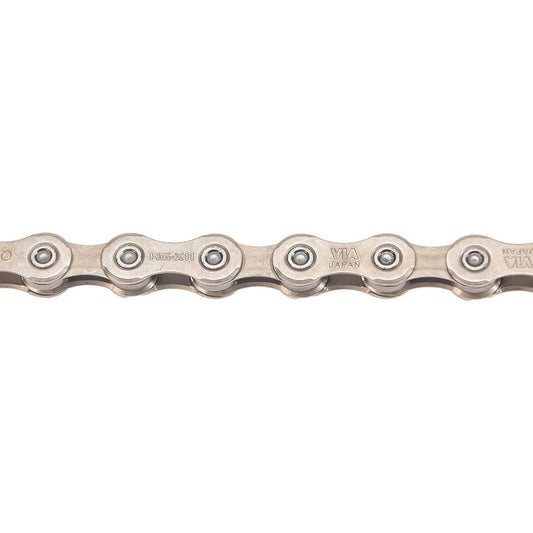
SHIMANO XT ULTEGRA CN-HG701-11 E-Bike Rated 11-Speed Chain
Regular price From 293.00 SEKRegular priceUnit price per -
12-Speed Chain SHIMANO XT ULTEGRA CN-M8100 Quick Link E-Bike Rated
Regular price From 352.00 SEKRegular priceUnit price per -
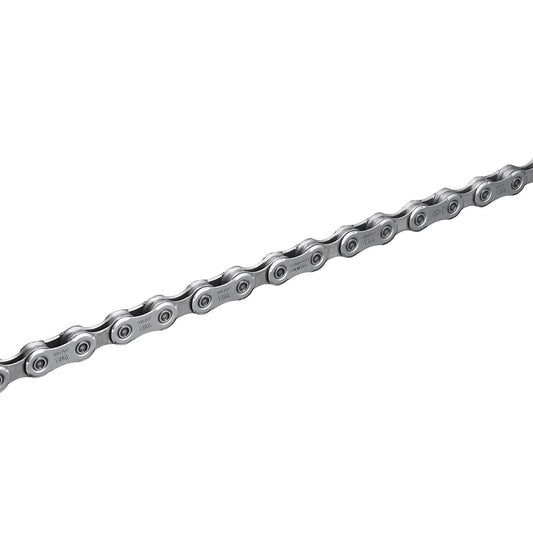
12-Speed Chain SHIMANO SLX 105 CN-M7100 Quick Link E-Bike Rated
Regular price From 223.00 SEKRegular priceUnit price per -
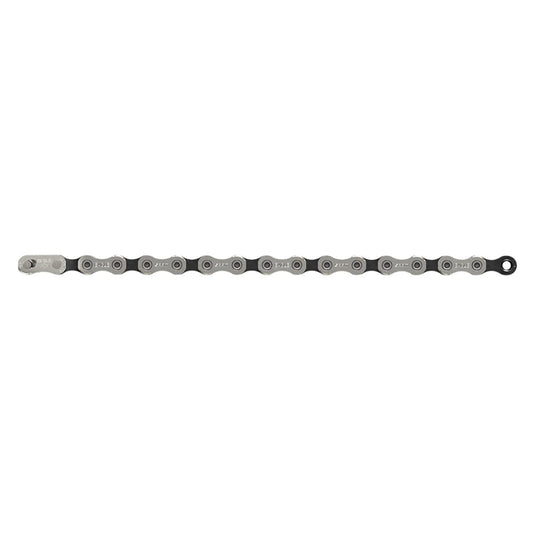
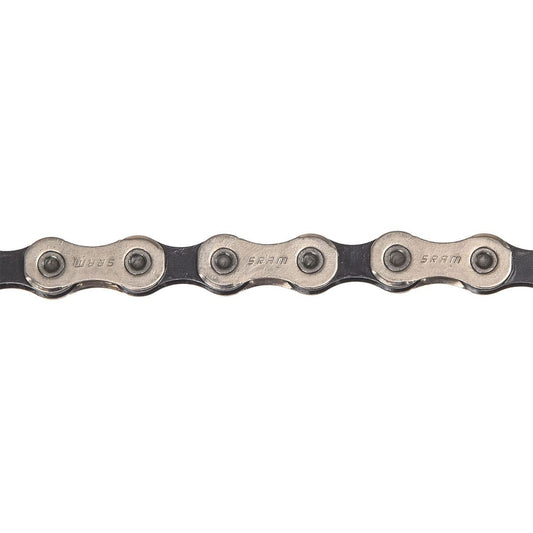
12-Speed Chain SRAM GX EAGLE
Regular price From 235.00 SEKRegular priceUnit price per -
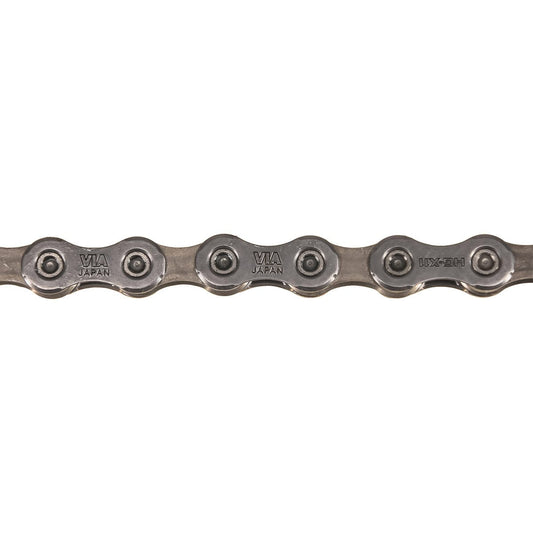
SHIMANO SLX 105 CN-HG601-11 11-Speed Chain E-Bike Rated
Regular price From 223.00 SEKRegular priceUnit price per -
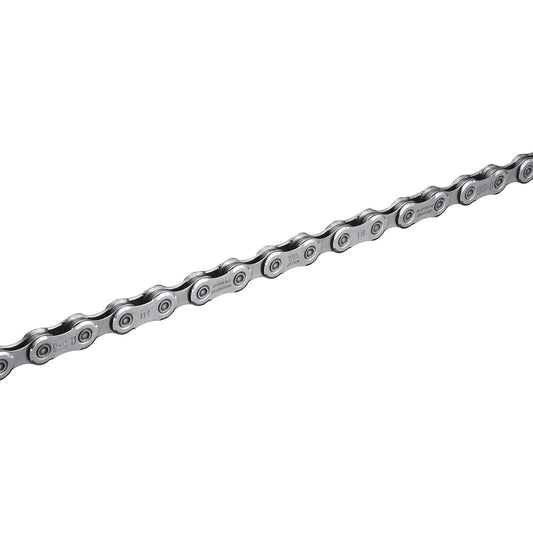
12-Speed Chain SHIMANO DEORE CN-M6100 Quick Link E-Bike Rated
Regular price From 188.00 SEKRegular priceUnit price per -
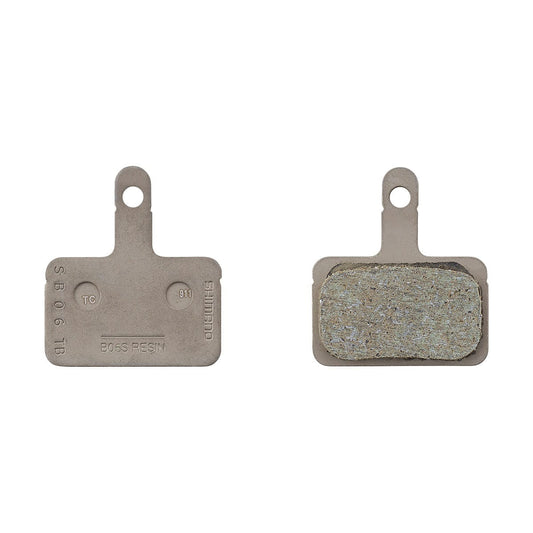
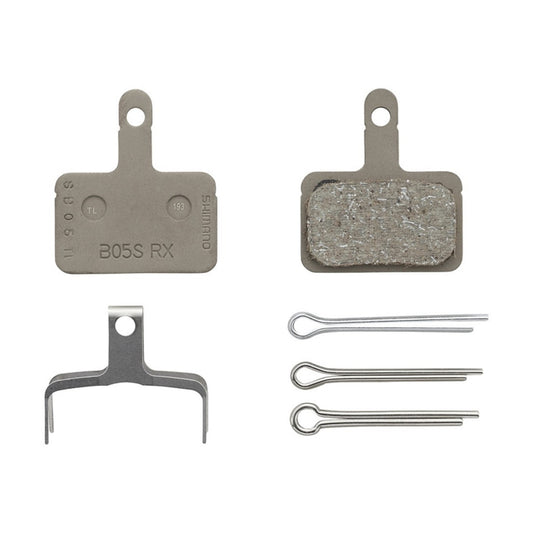
SHIMANO B05S-RX Organic Brake Pads
Regular price 71.00 SEKRegular priceUnit price per -
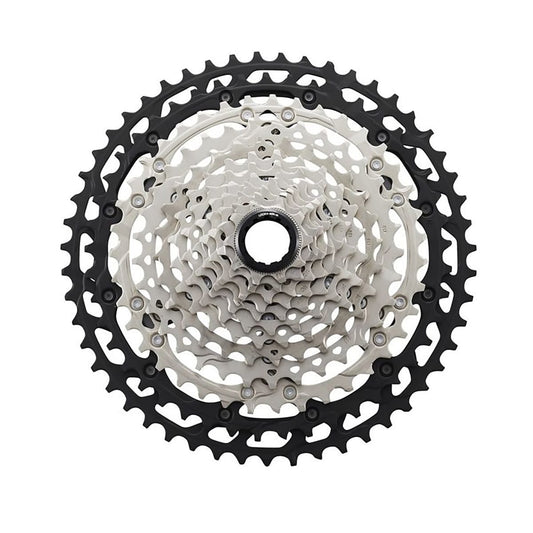
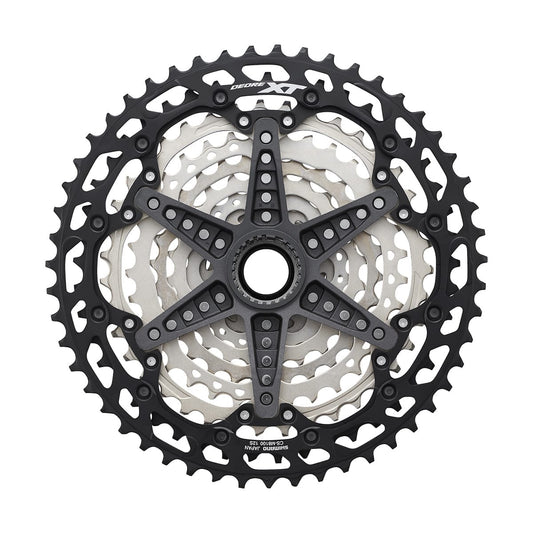
12-Speed Cassette SHIMANO DEORE XT CS-M8100
Regular price From 1,114.00 SEKRegular priceUnit price per


