


How to Train and Improve on the Road Bike?
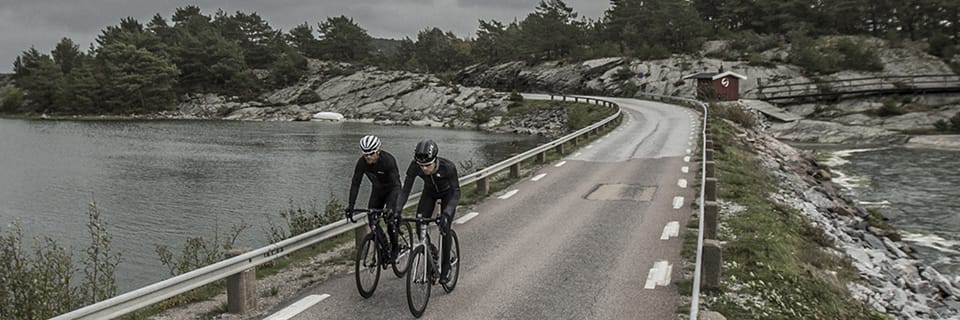
Reaching the summit of a mythical mountain pass, preparing for a first sportive, achieving results in a race… Each person at their own level defines their own goals. To improve and hope to perform on the day, all cyclists must follow a serious and well-adapted training programme.
Probikeshop presents here some key ideas and fundamental concepts about road cycling training. You will find everything you need to know about essential topics: watts, the usefulness of the power meter, intensity zones, example training sessions, the importance of recovery…
What are the goals of road cycling training?
Training is the means by which the cyclist improves their physical condition, progresses and achieves their best level of performance.
Improving and reaching your best level
For the beginner cyclist as well as the experienced rider, the goal of training remains the same: to improve! This progress is achieved through a general improvement in physical condition, and in endurance, muscular and cardiovascular capacities in particular. In short, training allows you to ride harder and longer.
Cycling training is built on a few basic principles, such as regularity and progressive overload. To hope to improve, you need to ride regularly and avoid (too many) long periods of inactivity. You also need to gradually increase the number of rides per week and progressively extend their duration, without neglecting rest and recovery time.
Performing and reaching your goals
Whatever your level, it is important to set achievable goals. A concrete goal is the cyclist's greatest source of motivation, keeping morale up during tough moments — when enduring hard training in difficult weather conditions or pushing through a dull home trainer session.
Cycling training does not necessarily lead to a competitive goal. Depending on your level, you might have in mind taking part in a local cyclo-touring event, climbing a mythical mountain pass, completing a demanding sportive, attempting an ultra-distance adventure, or achieving a result in a race, etc. Your goal must be substantial and feel like a challenge, to justify a serious investment of your free time.
What are the golden rules of road cycling training?
Effective road cycling training involves properly planning your build-up towards your goal. It seems essential to work on your base fitness first, in order to have a solid foundation for progression.
Personalising your training approach
To be coherent and achievable, your training programme must be built around your schedule, your professional commitments and your family life. Your basic framework (for example: 2 short sessions during the week + 1 longer ride at the weekend) must remain flexible and easily adaptable, depending on the weather, daily demands or how you feel. Don't hesitate to reschedule a session if needed, or replace it with a home trainer session.
Your training plan is built around the characteristics of the race/sportive you are preparing for. It is worthwhile incorporating specific exercises corresponding to the difficulty of the course ahead (course profile, event duration, effort intensity).
Building your training plan to improve
To establish your training plan and hope to arrive in peak form on the day, you need to structure your preparation weeks in advance, working back from the event date. Developed over a minimum of 2 months or 9 weeks (basic structure for a beginner-level training plan), your programme must include a progressive build-up in load.
Cyclist training is most often structured around successive work cycles, interspersed with recovery periods. Work cycles allow you to focus on clearly identified progression targets defined in advance. The classic approach involves starting with base fitness work combined with some intensity work, continuing with strength/velocity training, before moving on to high-intensity exercises to replicate race sensations.
The idea behind structured training in work cycles is to progress physically step by step, without rushing ahead, to allow the body to gradually assimilate the efforts. The build-up in training load must always remain linear. Resumptions or build-ups that are too abrupt are counterproductive, as they risk creating excessive fatigue.
Base fitness work
Base fitness work serves as the foundation of road cycling training. The endurance-focused cycle must provide a solid base on which an effective preparation can be built.
"Endurance rides" target a moderate intensity, around 80% of the cyclist's potential. The idea is to "ride easy", at a pace that does not generate muscle soreness or breathing difficulty. The goal is not merely to accumulate kilometres, but to ride at the right pace while maintaining a margin each time to start the next session in the best possible conditions.
The concrete effects of an endurance work cycle are gradually felt at the initial level. The cyclist improves little by little, finding their bearings on the bike again, re-accustoming their body to the position and pedalling technique. They also familiarise their body with the energy expenditure and the physical and mental sensations of long rides.
The base training cycle involves a gradual build-up in volume. This solid endurance base then makes it easier to handle higher intensities and convert them into fitness gains without allowing excessive fatigue to set in. If you skip the "endurance phase", you are more likely to struggle during your preparation.
The importance of recovery
Recovery phases must absolutely be integrated into your training plan, as they directly influence the progression mechanism.
When it comes to cycling recovery, it is important to distinguish between active recovery and passive recovery. Active recovery presents itself as a session in its own right: it involves "taking the bike for a stroll" by spinning the legs, simply to activate the muscles. Lower than the endurance pace, the recovery pace does not create fatigue. Passive recovery involves not touching the bike for 3 or 4 days ("micro-break") or a week ("full break").
It is essential to manage these recovery phases well! You should never wait for an overload of work (overtraining syndrome) before implementing a break, as excessive fatigue would impose an extended rest period, which in turn would cause a drop in physical level (loss of training gains). Therefore, it is wise to plan recovery phases during your preparation, in the form of micro-breaks, after an intensive training cycle/block or after a heavy week of training.
Understanding the principle of supercompensation:To fully understand the link between training, recovery and improvement, it is necessary to explain the phenomenon of "supercompensation", which is at the heart of cycling training.Behind the principle of supercompensation lies the physiological mechanism that triggers the improvement of physical fitness and the progression of the cyclist. It is a re-adaptation of the body, which has the effect of converting training into fitness gains. The aim is to create fatigue through an intensive training cycle, which first shocks the body before triggering a positive reaction on performance level. The body will gradually adapt to the workload and find new resources. The supercompensation cycle ends with a decisive recovery period, which relieves the body of all stress and reduces the fatigue curve. In short, the cyclist is rewarded for their training efforts.
The 3 phases of the supercompensation cycle
- Intensive training that causes fatigue, stresses the body and leads to a drop in physical capacities;
- Recovery phase that allows the body to assimilate the initial training loads and better sustain a new period of intensive training – progress begins to take hold;
- Recovery phase to eliminate fatigue and "supercompensate", to achieve one final physical peak before the goal event.
The key challenge for the cyclist is to properly measure, balance and structure the training phases and recovery phases. Training must build progressively, but significantly, to push the body to adapt. As for recovery, it must be sufficient to trigger the supercompensation reflexes. If the recovery period is too long, you lose the training effects and your fitness begins to decline.
Improving on the road bike
Training techniques to go further
The training approach for the experienced cyclist is highly controlled, allowing training sessions to be calibrated with scientific precision within the framework of a tailor-made programme.
The importance of the anaerobic threshold in cyclist training
To calibrate and personalise your training, it is essential to establish your rider profile, with the physiological data useful for performance monitoring (anaerobic threshold, MAP, Max HR, FTP). These data allow you to accurately target your training efforts, work at the desired intensity level to build quality sessions, and assess your performance and progression over the weeks.
The anaerobic threshold corresponds to a maximum effort level — "the threshold" beyond which the body produces more lactate than it can eliminate, when lactic acid accumulates in the blood and causes muscles to seize up. It is the maximum intensity level you can sustain over a prolonged effort (such as a time trial or a fast climb), before the muscle pain becomes too great and forces you to slow down.
There are several ways to determine your anaerobic threshold: via a laboratory stress test with regular measurement of blood lactate levels, or with an FTP test on the road (20 minutes of effort on a climb). The FTP (Functional Threshold Power) provides an estimate in watts of the maximum average power output sustained over a one-hour effort. It is useful to refine this raw power figure with the "weight" variable, to determine your power-to-weight ratio (in watts/kg), a valuable metric for assessing your climbing potential.
Other data are essential and must be known: Max HR (Maximum Heart Rate) and MAP (Maximal Aerobic Power).
- Max HR: peak heart rate at high intensity. Test on an uphill road with a heart rate monitor (maximum effort over 5');
- MAP: power at VO2 Max level when the body's oxygen consumption rate reaches its maximum capacity. Test on an uphill road with a power meter (maximum effort over 5').
Intensity zones to optimise your training efforts
Once these data are defined, they are used to refine your training exercises by targeting the right intensity zones at each stage of your preparation. Road cycling training experts have developed reference frameworks that distinguish different intensity zones, based on the values mentioned above (Max HR, MAP, FTP).
Here are several reference frameworks, among the most widely used in cycling training, which can serve as a guide.
| Intensity zone (exercise duration) | Max HR | MAP | Perceived effort |
|---|---|---|---|
|
i1 - Light intensity / Active recovery (several hours) |
< 75 % |
40 - 50% MAP |
No muscle soreness Very easy conversation Exhaustion after several hours |
|
i2 - Moderate intensity / Fundamental endurance (several hours) |
75 - 85 % |
50 - 60% MAP |
No muscle soreness Easy conversation Exhaustion after 3 - 4 hours |
|
i3 - Sustained intensity / Tempo (1-2 hours) |
85 - 92 % |
60 - 70% MAP |
Muscle soreness increases + Laboured conversation Exhaustion after 2 hours |
|
i4 - Anaerobic threshold intensity (20-60 minutes) |
92 - 96 % |
75 - 80% MAP |
Muscle soreness increases ++ Difficult conversation Significant exhaustion after 20' |
|
i5 - Supra-critical intensity / MAP (5-10 minutes) |
96 - 100 % |
100% MAP |
Muscle soreness increases +++ Very difficult conversation Complete exhaustion between 5 and 10' |
|
i6 - Sub-maximal intensity / Lactic anaerobic power (30-120 seconds) |
100 % |
1.5 x MAP |
Significant neural fatigue Maximum muscle soreness Conversation impossible |
|
i7 - Maximum intensity / Alactic anaerobic power (< 7 seconds) |
90 - 95 % |
2.5 x MAP |
Very significant neural fatigue No muscle soreness Feeling of exercising while holding your breath |
| Level | Exercise type | Power (% of FTP) | HR | Perceived effort (RPE scale) | Exercise duration |
|---|---|---|---|---|---|
|
1 |
Active recovery |
< 55 % |
< 68 % |
< 2 |
Infinite |
|
2 |
Endurance |
56 - 75 % |
69 - 83 % |
2 - 3 |
> 2 h 30 |
|
3 |
Tempo |
76 - 90 % |
84 - 94 % |
3 - 4 |
< 2 h |
|
4 |
Anaerobic threshold |
91 - 105 % |
95 - 105 % |
4 - 5 |
10 - 60 minutes |
|
5 |
VO2 Max |
106 - 120 % |
> 106 % |
6 - 7 |
3 - 8 minutes |
|
6 |
Anaerobic capacity |
121 - 150 % |
Not significant |
> 7 |
30 seconds - 2 minutes |
|
7 |
Alactic anaerobic power |
Not significant |
Not significant |
Maximal |
5 - 15 seconds |
These 2 scales show that there is no single path to follow for improving on the road bike. Choose the one that suits you best, according to your own feel.
Should you base your training on power or heart rate?
There are therefore 2 ways to calculate training intensity and load: power ("watts") and heart rate.
For a more precise measurement, it is advisable to base your training on power output. Indeed, tracking watts allows you to stay in the right zone and properly calibrate your session, independently of external conditions.
If you only have a heart rate chest strap, it is very useful to use it. You can base your training zones on your Max HR. However, it is worth noting that there is a margin of error, as your heart rate can vary depending on your level of fatigue and form. Furthermore, there is always a lag time between the moment the exercise begins and the moment your heart reaches the target intensity.
Your heart rate allows you to analyse your fitness/fatigue level over the weeks. A heart rate that drops quickly after sustained effort or a low resting heart rate are indicators of good form.
To summarise the power vs. heart rate debate, it is worth remembering that watts allow better calibration of training, while heart rate remains useful for assessing current form.
Some examples of road cycling training sessions
Depending on your goals, you can perform different exercises to improve, enrich and vary your training programme.
| Training / Progression focus | Session description | Intensity zone (ESIE scale) | Target exercise duration | Benefits / Gains |
|---|---|---|---|---|
|
Endurance |
Long fundamental endurance ride, without exceeding your FTP |
i2 - Moderate intensity |
3 hours |
Pushing your endurance zone further Being comfortable over a longer distance Maintaining consistency in your training plan |
|
Sub-maximal strength |
Repeated exercises at low cadence |
i3 - Sustained intensity |
5 sets of 5 minutes at 50 pedal strokes per minute (50 rpm) |
Building power output Being able to push bigger gears Working on pedalling technique |
|
Anaerobic threshold |
Repeated threshold exercises with recovery intervals |
i4 - Threshold intensity / i2 - Moderate intensity (recovery) |
3 sets of 10 minutes at threshold (i4) + 5 minutes recovery (i2)) |
Pushing your anaerobic threshold further Being able to repeat threshold efforts |
|
MAP |
Repeated exercises around MAP with recovery intervals |
i5 - MAP intensity / i2 - Moderate intensity (recovery) |
5 sets of 1 minute at MAP level (i5) + 1 minute recovery (i2) |
Pushing your MAP further Being able to repeat efforts in zone i5 |
|
Lactic |
Repeated long sprints with large recovery intervals |
i6 - Sub-maximal intensity |
3 sprints of 30 seconds every 30 minutes |
Tolerating the build-up of lactic acid Increasing pain tolerance Building power output |
What are the useful tools for improving on the road bike?
Probikeshop offers a wide range of road cycling training products that will allow you to run your sessions effectively and track your performance over time.
The home trainer
The home trainer is an excellent tool for specific work over a short duration. When you get on your home trainer, you need to make the most of your time on it, as the session will rarely exceed 90 minutes.
Forget endurance — home trainer work will be quality-focused, except in the case of a recovery session to spin the legs. Intensities, strength, pedalling technique… All sorts of exercises are available to you.
The advantage of the home trainer? Working your intensities in a linear fashion, with total control, without being affected by traffic. When winter arrives, the home trainer is your ideal training partner, allowing you to avoid losing all the gains from the past season.
Today, with all the technological advances and motivating apps on the market, the home trainer has become a connected, fun and appealing device.
The heart rate chest strap
The heart rate chest strap (cycling heart rate monitor) allows you to manage your session, analyse it and measure your fatigue level. Your HR strap can also accompany you off the bike, particularly in the morning, to take your resting heart rate.
The power meter
The power meter remains the essential tool for conducting quality cycling training. It is useful for measuring your effort accurately and for avoiding starting too fast on longer intervals. Your power meter also collects performance data that you can analyse once you get off the bike.
Training tracking tools
Of course, your training doesn't stop once the bike is put away. All your data can be transferred to your preferred training tracking platform. This tool allows you to personally measure the workload completed and fine-tune your training plan based on the values collected. It also allows you to share your data with your coach, directly after your ride.
Conclusion
Road cycling training is a specialised field where expertise and feel are paramount. It must absolutely be personalised according to the individual, the time of year and each person's goals. It is up to you to choose the method you wish to explore, as there is no single path to improvement. The most effective training is not about following the best exercises, but about finding the model best suited to your overall level as well as your current level.
ROAD - Power Meters
-

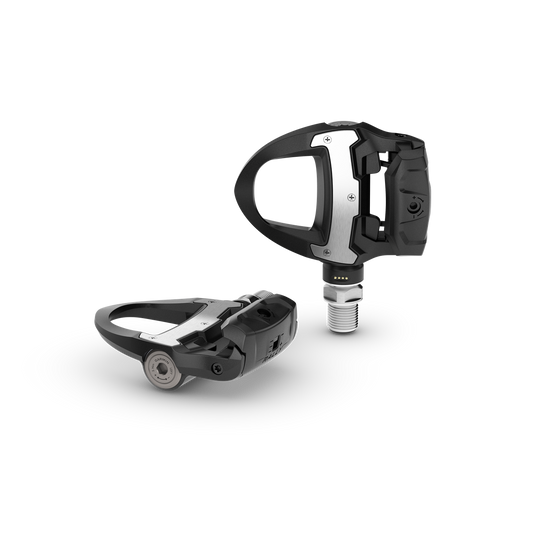
GARMIN RALLY RS 210 Power Meter Pedals
Regular price 9,373.00 SEKRegular priceUnit price per -


FAVERO ASSIOMA PRO RL-2 Power Meter Pedals
Regular price 8,127.00 SEKRegular priceUnit price per -


FAVERO ASSIOMA PRO RL-1 Power Meter Pedals
Regular price 5,104.00 SEKRegular priceUnit price per -

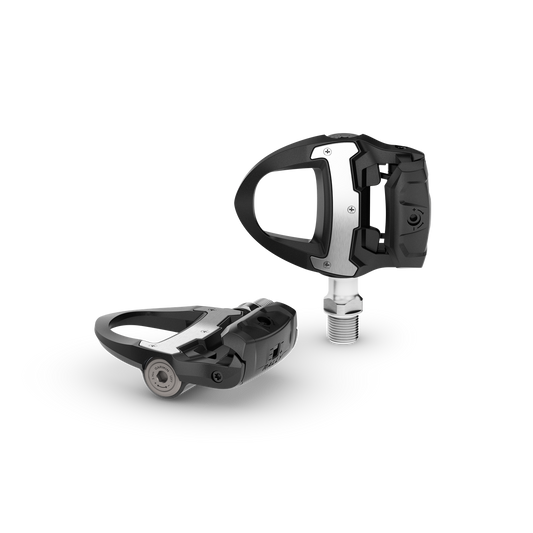
GARMIN RALLY RS 110 Power Meter Pedals
Regular price 5,858.00 SEKRegular priceUnit price per -

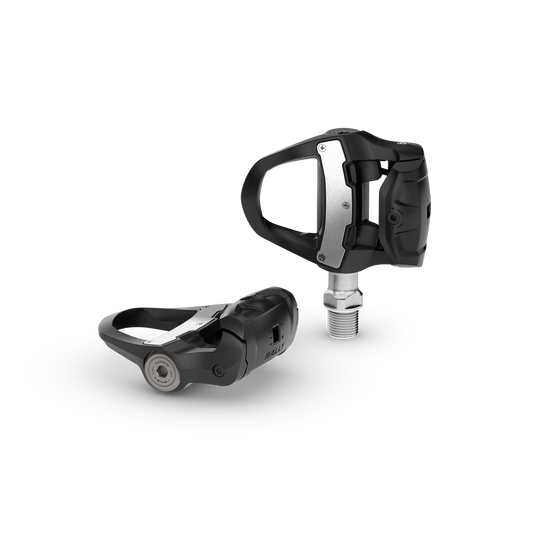
GARMIN RALLY RK 110 Power Meter Pedals
Regular price 5,624.00 SEKRegular priceUnit price per -

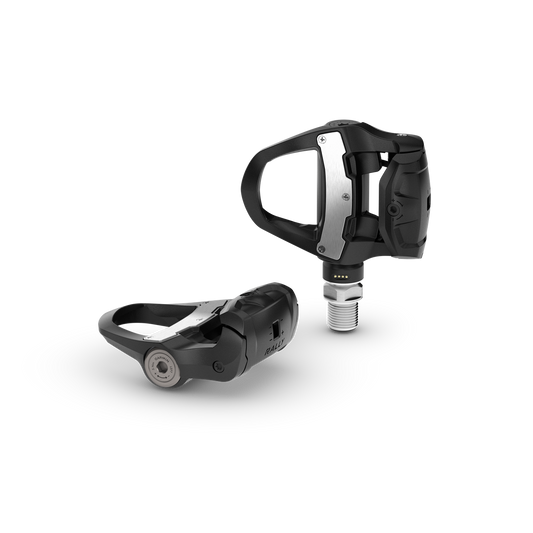
GARMIN RALLY RK 210 Power Meter Pedals
Regular price 9,373.00 SEKRegular priceUnit price per -
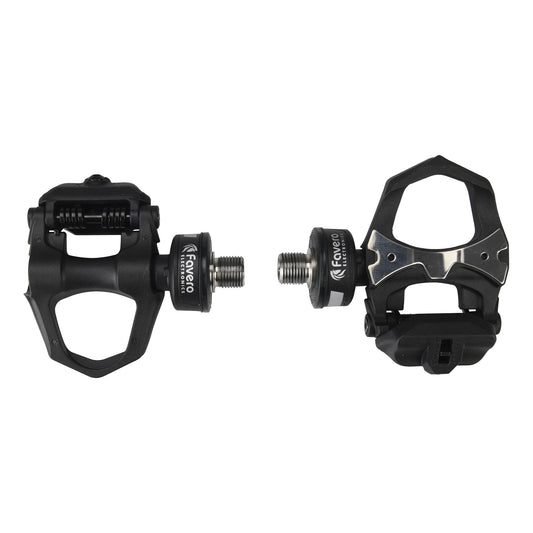
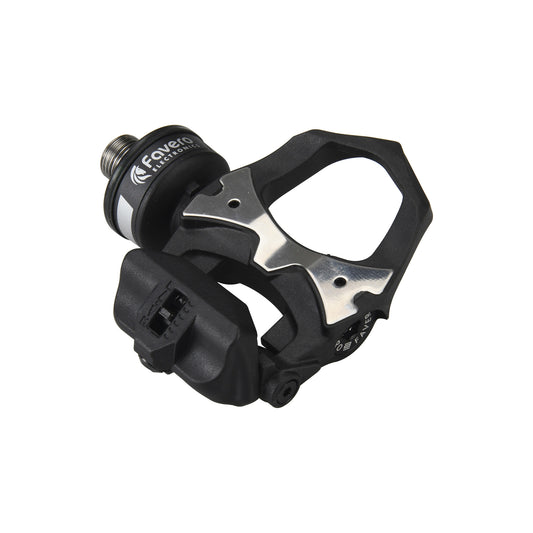
FAVERO ASSIOMA DUO Power Meter Pedals
Regular price 5,272.00 SEKRegular priceUnit price per -

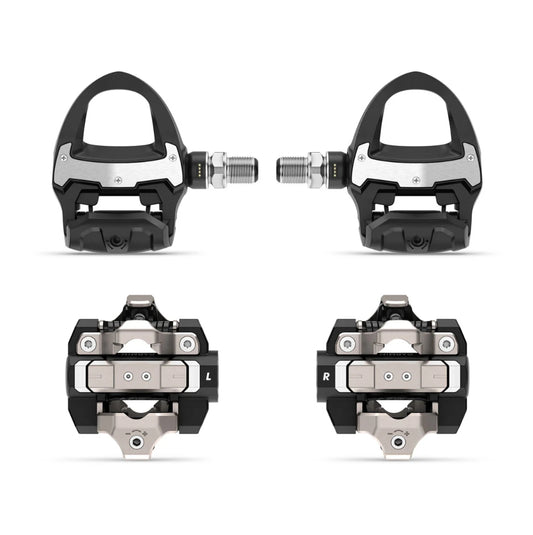
GARMIN RALLY RS/XC 210 Power Meter Pedal Kit
Regular price 12,888.00 SEKRegular priceUnit price per


